Tag Archives: Archaeology

The Year Zero, Taliban Style

Revolutionaries have an extremely nasty habit of trying to rub out the past.  The leaders of the French Revolution, for example, quickly disposed of the traditional calendar, replacing it with a brand new system that began with the Year 1. The idea was to purge France of all its old tainted ways, forging a new revolutionary society free of aristocratic privilege, titles, fashions and, of course, religion.  Very quickly, everything old became suspect in France.  One had a far better chance of surviving the Reign of Terror by embracing the new.

The murderous Khmer Rouge regime in Cambodia took a page from the French revolutionaries.  The Khmer Rouge leader, Pol Pot, set out to annihilate the country’s colonial past in a policy known as Year Zero.  Pol Pot’s followers murdered vast numbers of intellectuals and teachers – the people who preserved Cambodian history and traditional culture.   “We are building socialism without a model,” Pol Pot said.  “We wish to do away with all vestiges of the past.

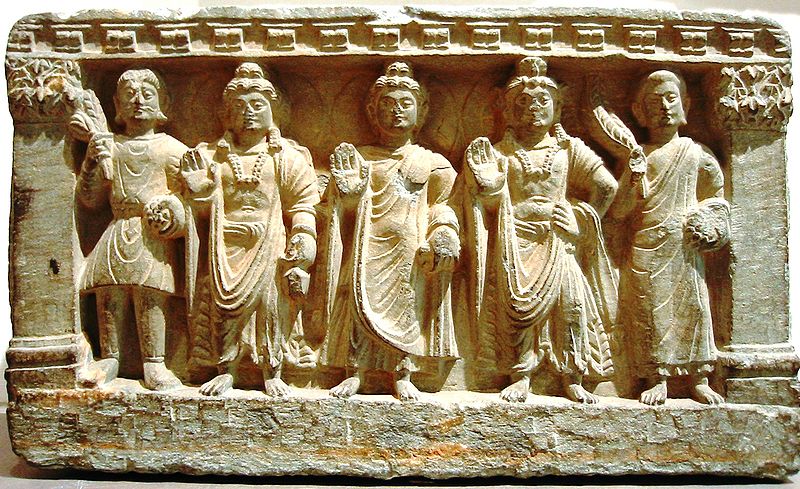
I see a similar kind of thinking now threatening northeastern Pakistan.  Taliban forces recently occupied the Swat Valley,  an area with an incredibly rich Buddhist history.  According to tradition, Buddha himself journeyed to Swat during his last reincarnation and preached to the local villagers.  And by the 6th century A.D, Buddhist pilgrims from as far away as China flocked to the valley, a  lush land of orchards and rushing mountain streams.  One early Chinese account describes as many as 1400 Buddhist monasteries perched along the valley walls in the 7th century.

Taliban forces want to eradicate this rich history.  They have twice tried to blow up 7th century Buddhist relics, and one of their blasts badly damaged the museum in the main Swat town of Mingora.  In a news story two days ago in The Himalaya Times, the museum’s director raised the prospect of much greater destruction now that foreign archaeologists and tourists have fled the region.  Without international eyes on Swat, Taliban leaders could become emboldened to destroy the region’s great cultural treasures.

I personally think the Taliban is a revolutionary force more than a religious one.  They are all about political control.   I sincerely hope the Pakistan government will do all it can to stop these dangerous men before they destroy the visible remains of Swat’s glorious past.

Pisco Sour: A Field Guide

As an archaeological journalist,  I’ve spent much time over the years hanging out with archaeologists in bars and restaurants around the world. Archaeologists are well known for their love of drink, and some of the most liquid evenings I have ever spent were in the company of archaeological teams.

So, from time to time,  I will write here about the wonderful drinks that archaeologists particularly love—from Greenlandic schnapps (made from the intestinal contents of birds) to  Andean chicha brewed from corn fermented by human saliva.   But I thought I would start off this series with a huge favorite of many Andean archaeologists:  the Pisco Sour.

Pisco Puro is a clear brandy distilled from the juice of the black quebranta grape which flourishes in the sunny fields of the Pisco and Ica Rivers in Peru.  Spanish colonists brought this sweet grape to the New World and began distilling brandy from it at least as early as 1547, less than a decade and a half after the conquistadors executed the Inca king Atahualpa.

My first encounter with a Pisco sour came when I was travelling on assignment to Peru during the very ugly civil war there during the early 90s.  The Shining Path guerillas were not only setting off bombs in Lima and shooting entire villages in the Andes, but they were also targeting foreigners.  A week before I arrived, they hauled off all the foreign tourists travelling on a bus to the highlands,  and shot them, as a message to the international community.

All this was rather unsettling both for me and for the Canadian archaeologists I was travelling with.  But my story focused on new research on the Nasca culture of Peru’s arid coastal desert, and I had an unforgettable journey.   For several days, I travelled with Andean archaeologist Patrick Carmichael by Landrover along the roadless and largely uninhabited Pacific coast:  our destination was a Nazca site he had just found by surveying near the mouth of the Ica River.   But it was a difficult journey:  the Landrover repeatedly broke down,  often leaving us stranded hours from any hamlet.  But the driver was a gifted mechanic,  and every unplanned stop seemed to produce some kind of wonder.  At one point, I strolled away from the mechanical problems only to find two human mummies protruding from the sand.

Our journey ended in the city of Ica, and I still remember the delicious luxury  of clean sheets,  running water, and a very good Pisco sour.

So here is my recipe for this very South American drink.  I’ve adapted it slightly from a recipe in a book I really treasure,  Tony Custer’s The Art of Peruvian Cuisine (Ediciones Ganesha, S.A: Lima, 2003).

Ingredients:

To make the sugar syrup:

one-half cup of sugar

3 tablespoons water

To make the drink:

5 ounces Pisco

2.5 ounces lime juice

1 egg white

Ice

To Serve:

Angostura Bitters

Preparation

To prepare the sugar syrup:  Put one-half cup of sugar in a small saucepan with 3 tablespoons of water,  just enough to moisten the sugar.  Bring the mixture to a slow boil and while stirring, cook until all the sugar is dissolved.  Remove from the heat and set aside for a few minutes.

To make the sour:  Pour the lime juice and the Pisco into the warm sugar syrup and stir thoroughly to blend the ingredients completely. Pour the mix into a blender jar and add just enough ice to double the volume of liquid in the glass.  Blend on high for an additional 30 seconds to crush the ice. Add one egg white and blend on high for one minute. Transfer to a pitcher and serve immediately in either old-fashioned or white wine glass.  Place a drop of Angostura Bitters in the middle of the foam in each glass.

Serves 3.

Angels, Demons, and the Shroud of Turin

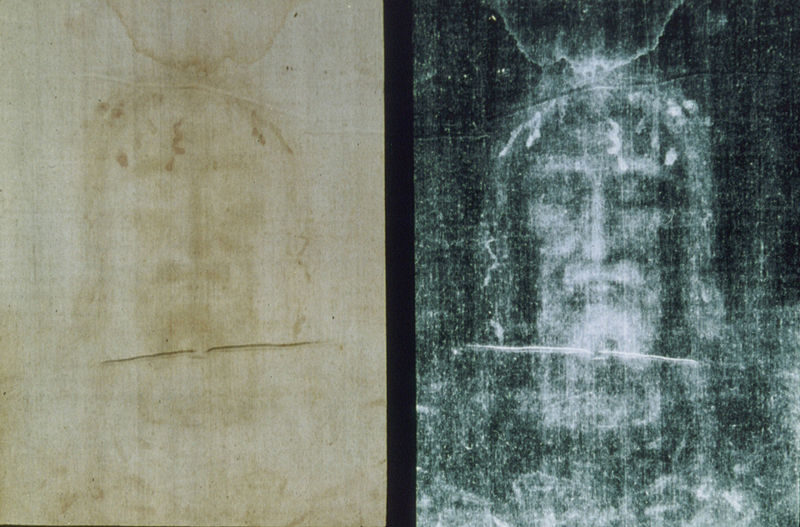
It has all the ingredients of a classic Dan Brown novel:  a scholar from the Vatican’s secret archives,   centuries of mystery and intrigue, and a faint inscription on an ancient  Christian shroud. Yesterday,  in a Times online story, Barbara Frale, a staff historian at the Vatican archives, announced that she had deciphered the imprint of Greek, Hebrew and Latin writing on the famous Shroud of Turin.  According to Frale, the lettering is part of a death certificate glued to the shroud covering Jesus Christ immediately after the crucifixion.

Frale, who is about to publish a new book on the shroud, says that such certificates were often issued in the old Roman colony of Palestine, particularly in criminal cases.  The body of an executed criminal could only be returned to the grieving family after the individual was buried for a year in a common grave.   Christians,  of course, believe that Joseph of Arimathea took possession of  Christ’s body shortly after death, carrying  it to a tomb he had prepared for himself.  But Frale says that a death certificate could still have been attached to his shroud.

Frale has clearly studied the inscription, and she presents new evidence.  But I  find the archaeological evidence far more compelling. In 1988,  the Catholic Church gave the University of Arizona and two other institutions the task of dating the Shroud of Turin.  These institutions ran Accelerator Mass Spectrometry tests  with meticulous care on snippets from the shroud, revealing that the fabric was much younger than previously believed.  The tests showed that it dated between A.D. 1250 and 1390.

Critics of the dating tests charge that the researchers mistakenly took snippets from medieval repairs to the shroud.  But new fiber studies conducted on the University of Arizona sample reveal that its overall weave structure is  identical to that of the rest of the textile.

We certainly haven’t heard the end of the controversy over the famous shroud yet.  But right now,  I think the odds are stacked strongly  in favor of a medieval origin.

Heather Pringle