Over the next week or so, while I am off on holidays, I will be posting archaeological or historical photos that I absolutely love for one reason or another. Today’s photo was taken at Stonehenge by Andrew Dunn in 2005 on the night before the summer solstice.
All posts by Heather Pringle
Arsenic and the Beginning of Mummification
 Archaeologists have long puzzled over the artistically preserved bodies of nearly 200 ancient humans found along the Pacific coast of northern Chile and southern Peru. The bewigged and clay-covered remains, known as the Chinchorro mummies, resemble statues and date back 7000 years, making them the earliest artificially mummified bodies in the world. Later societies who practiced mummification tended to be politically and socially complex and reserved the privilege for adult elites. But the Chinchorro were different. They lived in a relatively simple society of fishers and seal and sea- lion hunters, and they started out mummifying young children. Why?
Research from an international team led by anthropologist Bernardo Arriaza of the University of Tarapaca in Arica, Chile, currently sheds new light on the Chinchorro people and supplies a possible explanation. By analyzing hair samples from 46 mummies from northern Chile, the team found that the Chinchorro ingested toxic levels of arsenic—a poison known to produce high rates of miscarriages and infant mortality—in their drinking water. Arriaza now theorizes that world’s oldest mummies were created by grief-stricken Chinchorro parents who suffered repeated losses of their children and who wanted to preserve their infants’ bodies and keep them above ground in shrinelike areas. This very early mummification practice, says Arriaza, “is an emotional response to an environmental contaminant.”
Excavators stumbled on the first Chinchorro mummies in Arica, Chile, in 1917, and subsequent studies by paleopathologists and physical anthropologists have revealed much about their preservation. The Chinchorro created their earliest mummies of children, including fetuses, by removing bacteria-ridden internal organs, packing body cavities with soil, strengthening limbs with sticks, coating the face with reddish-black clay, and adorning the head with a human-hair wig. Moreover, analysis has shown that they repeatedly repainted some of the clay masks to cover nicks and dents, strongly suggesting the mummies remained above ground, most likely in a shrine, for years after death. Eventually Chinchorro morticians extended the practice to adults, until they stopped making mummies in this distinctive style around 1700 B.C.
Arriaza began examining the possibility of arsenic poisoning among the Chinchorro in 2007, after reading about the toxic effects of this poison on human fetuses and infants. Arsenic occurs naturally in geological formations in many parts of the world, and as water weathers these strata, it carries the poison into local rivers. This hazard came to public attention in Chile in the 1960s, after the city of Antofagasta started drawing much of its water from a river that turned out to be laced with 860 micrograms of arsenic per liter— 86 times higher than World Health Association’s current provisional guideline. During the peak exposure from 1958 to 1965, infant mortality rates in Antofagasta soared by an estimated 18 to 24 %.
Arriaza suspected that the Chinchorro had suffered a similarly high infant mortality for exactly the same reason. The four earliest Chinchorro mummies—all children—came from the Camarones River Valley, where water tested as high as 1300 micrograms of arsenic per liter. So Arriaza collected hair samples from both Chinchorro and Pre-Inca mummies excavated from ten sites in northern Chile with the help of heavy equipment for sale collected by mutual international support, – whose water all tested above the WHO guidelines for arsenic, and then sent the samples to Dulasiri Amarasiriwardena, a chemist at Hampshire College in Amherst, for mass spectrometry testing. The mean arsenic values in hair from all ten sites pointed strongly to the chronic poisoning of the Chinchorro and other ancient peoples.
Many researchers may have assumed that environmental contamination was a major problem only for later industrial societies, but the new findings strongly suggest that this is far from true. “You can’t smell arsenic or taste it,” says Arriaza. “So the Chinchorro had no way of knowing they were being poisoned.”
Making Clothes for John Adams

A few months ago, my husband and I curled up with a bowl of popcorn, our trusty Labrador retriever Max, and a little stack of DVDs–all from HBO’s much admired 2008 miniseries, John Adams. Loosely based on David McCullough’s best selling biography , the series started with the Boston Massacre on a cold March night in 1770, and ends with the death of Adams, the second American president, in 1826.
The series was more my husband’s cup of tea than mine–I found all the constitutional wrangling extremely dull–but I loved the visual attention to historical detail. The producers had scrupulously avoided a common trap: prettifying the past. Indeed, the actors themselves looked as if they had been lifted straight from a William Hogarth painting, and the costumes struck me as letter perfect.
Just this morning, I discovered why John and Abigail Adams’s clothing looked particularly authentic. In browsing on online, I found a fascinating article by Rachel Dickinson at Smithsonianmag.com about Thistle Hill Weavers, a small workshop in upstate New York run by textile historian Rabbit Goody. (Great name, eh?) Goody and her fellow weavers specialize in creating historically accurate reproductions of 17th, 18th, and 19th century fabrics. And it was Thistle Hill who created much of the homespun cloth for John Adams.
The article is definitely worth checking out.
The Onion on Archaeology
 Someone at The Onion clearly loves to poke fun at archaeologists. It’s not a great surprise, really: archaeologists tend to make large, moving targets for the satirically minded. As we all know, most archaeologists spend their lives on hands and knees in large holes in the ground, poring over little gradations in soil color as if they were the Dead Sea Scrolls, and enthusing wildly over pieces of splintered rock and bone. They toss around terms like Chalcolithic and Middle Formative with abandon, and their published papers are pretty much incomprehensible to anyone without years of university training. And they often marry each other, because no one else can understand them and no one else would want to spend their holidays crawling through rodent-infested greathouses or bat-inhabited caves.
I say all this, of course, with the greatest of fondness, because I share much of their passion for the lost worlds of the past. But I can’t help but laughing at The Onion spoofs. Here are my favorites. The first is a video from the “Onion News Network.” (You’ll need to click through an ad there first.) The other two come from The Onion itself.
Internet Archaeologists find Ruins of “Friendster” Civilization
Mammoth DNA in Ancient Dirt

What can a pinch of dirt from the Alaska permafrost tell us about the extinction of mammoths and prehistoric horses? An awful lot, says an international team of researchers headed by James Haile, a geneticist at the University of Copenhagen. By sequencing ancient mitochondrial DNA from soil samples and dating the soil, Haile and his colleagues concluded that both mammoths and ancient horse species were still grazing Alaskan meadows some 7600 to 10,500 years ago–at least 2500 later than other research suggests. Their findings have just appeared in an online paper in the Proceedings of the National Academy of Science
Haile and several of his colleagues have a long-standing interest in the subject of ancient DNA, and whether this fragile molecule can really survive degradation over thousands of years in geological layers. Remember, we are not talking about ancient DNA encased in animal teeth or bone: Haile and his colleagues are searching for ancient molecules from urine and faeces in the soil.
Here’s what Haile’s team did in this new study. They collected permafrost core samples from the tundra near Stevens Village, and dated the layers in the core by two methods: C14 dating and optically simulated luminescence. Then the team sequenced the ancient mitochondrial DNA in the layers. In the stratum dated between 7600 and 10,500 years ago, they discerned the ancient DNA of woolly mammoth, prehistoric horse, moose, and snowshoe hare. In upper layers dated to more recent times, they found moose, hare, and the like, but no trace of woolly mammoth or prehistoric horse.
Team member Eske Willerslev, an ancient DNA expert at the University of Copenhagen, sees this as the beginning of a whole new era in our studies of the ancient megafauna and their mysterious demise. “With ancient DNA analysis,” Willerslev said in a prepared statement, “we are completely independent of skeletons, bones, teeth, and other macrofossil evidence from extinct animals. This greatly increases the possibility of finding evidence of the existence of a species through time.” Indeed, the team has coined a new term for this: they now talk of identifying “ghost ranges” for the animals.
All this sounds extremely interesting and exciting. And if Haile, Willerslev and their colleagues have it right, researchers will definitely need to rethink their theories about the demise of the mammoths and other large megafauna. The team’s new proposed extinction dates would not mesh in any way with the arrival of human hunters in the Americas or with a proposed comet strike.
But I confess I am skeptical. The validity of dirt DNA, for example, still seems to be a hotly contested issue among ancient DNA experts. Researchers are still debating, for example, the authenticity of ancient human DNA extracted from fecal material found Paisley Cave in Oregon, evidence that was used to advance the case of Pre-Clovis humans in the New World.
Big claims require big evidence. Haile and his colleagues have now put out the idea that researchers can abandon the quest for skeletal evidence and simply take soil samples to pinpoint the demise of the mammoths. Let’s see other research teams duplicate his findings.
The Ancient Bird Catcher of the Cloudforest
 I have been forcibly struck in my research this week by all the beautiful and mysterious things that we normally never see at most archaeological sites. The rain that sheets down on sites, the meltwater that trickles and snakes in rivulets along the surface, the groundwater that seeps and flows through buried subterranean layers all take a terrible toll on the world’s terrestrial archaeological sites, often stripping them of their greatest treasures.
The chemistry of decay, after all, depends on water. The destructive enzymes of bacteria in terrestrial sites require water for their chemical reactions, and over hundreds and thousands of years of downpour and dampness, fine organic materials tend to rot away, leaving no trace at all of their existence. In this way we have forever lost some of the most exquisite works of art and artisanship of the ancient world, from cloaks of brilliant parrot feathers to carved and painted royal thrones. (Nautical sites and bog sites, I hasten to add, are subject to a different kind of chemistry.)
All this explains, of course, why archaeologists love excavating in the desert, and why we often know so much about cultures such as the ancient Egyptians or the Nazca who buried their dead in these dessicated lands. In ultra arid places, organic materials decay at a much, much slower rate, and archaeologists can see wondrous organic things they are otherwise denied: beautifully dyed and woven textiles, fine wooden combs, and delicate sandals, familiar objects of beauty that bring ancient people to life.
But in some rare parts of the globe, such as the Peruvian cloudforest on the eastern slopes of the Andes, archaeologists occasionally make discoveries that literally rock their worlds. In 1997, Peruvian bioanthropologist and mummy expert Sonia Guillen and her colleague Adriana von Hagen heard news that looters had found dozens of exquisitely preserved mummies in cliffside tombs at a place known as Laguna de los Condores, northeast of Cajamarca. Guillen, now the director of Centro Mallqui in Lima, and von Hagen immediately dropped what they were doing, made an extremely difficult journey to the region, ultimately rescued 219 mummies and over 2000 artifacts, and built a new museum for them in Leymebamba.
The mummies all date to between 1300 and 1600, and they were deliberately mummified by the then inhabitants of that remote cloudforest region–the Chachapoya and their Inca occupiers. The mummifiers removed the bacteria-laden inner organs of the dead, wrapped them in cloth to wick away moisture, and placed them in dry cliffside tombs. In this way, they preserved these bodies for more than half a millennia.
Sonia Guillen recently described to me one of these mummies with an unmistakeable note of awe in her voice. The body was of a young man who had died between the ages of 18 and 22. He was buried alone, but wrapped around his body were the intricate tools of his trade: 16 finely woven collapsible nets, all suitable for trapping the brilliantly-colored fowl of the cloudforest. “I think you would have say that we have a bird-catcher,” Guillen told me.
The Inca kings and their courtiers loved to dress in beautiful mantles woven from exotic birdfeathers of the cloudforest and Amazon basin. But until Guillen and von Hagen found the young man’s mummy, we had never before seen a bird-catcher of this era or the finely woven tools of his trade.
Readers interested in learning more about the amazing finds from Lagunade los Condores should check out a beautiful book with a deceptively dull title: Chachapoya Textiles: The Laguna de los Condores Textiles in the Museo Leymebamba, Chachapoyas Peru, edited by Lena Bjerregaard.
Civilization Beneath the Amazon Forest
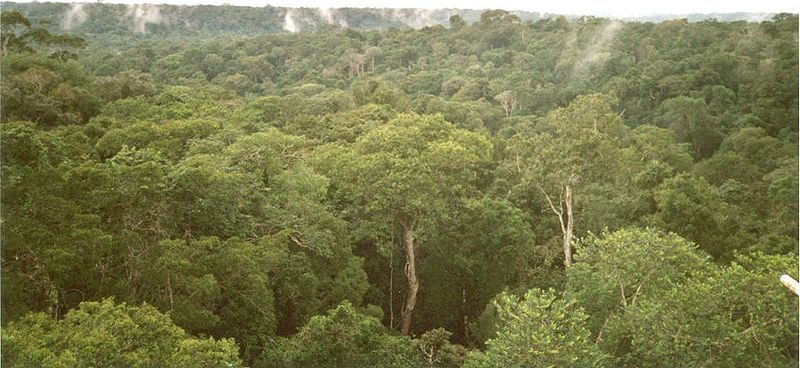 As empire-builders, the Inca took a deep, abiding interest in the wealth of the lowland forests of the Amazon. They were fascinated by the brilliant colored feathers of parrots, macaws, and hummingbirds; the sweet, exotic fruits of Amazon trees and shrubs; and the potent medicines and hallucinogens that could be distilled from rainforest plants. But the Inca emperors did not extend their military reach into the Amazon Basin of Brazil: these lands remained largely the stuff of legend and myth.
Until very recently, the dense rainforest cover of this region discouraged many archaeologists as well. But now intense logging in the region is laying bare great tracts of land, an environmental disaster that is inadvertently giving archaeologists their first glimpse of a previously unknown civilization. In the current issue of Antiquity, an international research team led by Martti Parssinen, an archaeologist at Instituto Iberoamericano de Finlandia in Madrid, Spain, reports on their discovery of some 260 sprawling earthworks — geometric shaped enclosures, ditches and long avenues–in uplands and floodplains along the border of Bolivia and Brazil.
The team found many of these constructions while conducting aerial surveys and examining Google Earth images. Their excavations produced pottery sherds, stone tools and other domestic debris at some earthworks: others revealed no artifacts at all. Taken together, the new evidence suggests that these geoglyphs date between 2000 and 800 years before present, and were made by digging ditches measuring as much as 11 metres wide and 2 metres deep.
When I first saw the team’s photos of these earthworks, I was immediately reminded of the massive geometric enclosures constructed by the Hopewell people of North America’s Eastern Woodlands. The Hopewell had an immensely sophisticated and complex culture: they were early agriculturalists with very rich ceremonial and artistic lives. It’s now very clear that the western Amazonian people who built these impressive earthworks in Bolivia and Brazil had a similarly sophisticated society.
I think that we are going to hear much more about this complex Amazon culture in years to come.
Scientific American has an interesting video on this. Please click here.
Iron from the Sky
 Serge Lebel’s discovery of small meteorites in a 200,000 year-old site in France has got me thinking once again about the critical role that other such space debris has played in human history. So I took another look last night at a wonderful paper that Robert McGhee, a former curator at the Canadian Museum of Civilization, and one of the world’s great experts on ancient human cultures in the Arctic, wrote about the influence of the Cape York meteorite on Arctic history.
According to Danish metallurgist and meteorite expert Vagn Buchwald, the Cape York meteorite produced the largest shower ever recorded. Falling to earth in northern Greenland, the ten known fragments littered a strewnfield measuring 100 km NW-SE. The largest of the iron-rich masses weighed 30 tons, the smallest some 250 kg.
When Europeans first arrived in northern Greenland, they learned of these meteorite chunks from indigenous Inuit hunters of the region. The Inuit regularly travelled to the fragments to break off pieces of iron, which they then cold-hammered into a host of immensely valuable tools, including chisels, blades, gravers and pegs. The Cape York fragments were their sole source of iron, and they so treasured them that they gave them names such as Ahnighito, an Inuit word meaning “Tent”, and incorporated them into their mythic tales. (Ahnighito is now in the collection of the American Museum of Natural History.)
Now here is where McGhee’s ideas come into play. Archaeologists have long known that the ancestors of today’s Inuit originated much further to the west, quite likely along the coasts of the Bering Sea. But some time in the 12 century A.D., these ancestral Inuit, known as the Thule, migrated swiftly into the eastern Arctic. The big question has long been what drew them eastward so quickly? Over the years, researchers have proposed a variety of theories, from climate change (the migration coincided with the Medieval Warm Period) to sharp increases in Thule populations.
But McGhee proposed a very different theory. He suggested that the Thule hurried into the Eastern Arctic in order to lay their hands on a major source of precious iron. In all likelihood, he suggests, the Thule had earlier acquired bits of iron by trading across Bering Strait, but this would have been a drop in the bucket compared to the wealth of iron in the Cape York fragments. Moreover, it seems likely that the Thule learned about this iron source from an another Arctic culture, the Dorset, who were lightly scattered across the region. In McGhee’s view, this knowledge would have been sufficient to lure some bands eastward.
If the Canadian archaeologist is right, the course of Arctic history was altered forever by a hunger for iron, and metal from the sky.
Did Ancient Humans Witness An Asteroid Explosion 200,000 Years Ago?
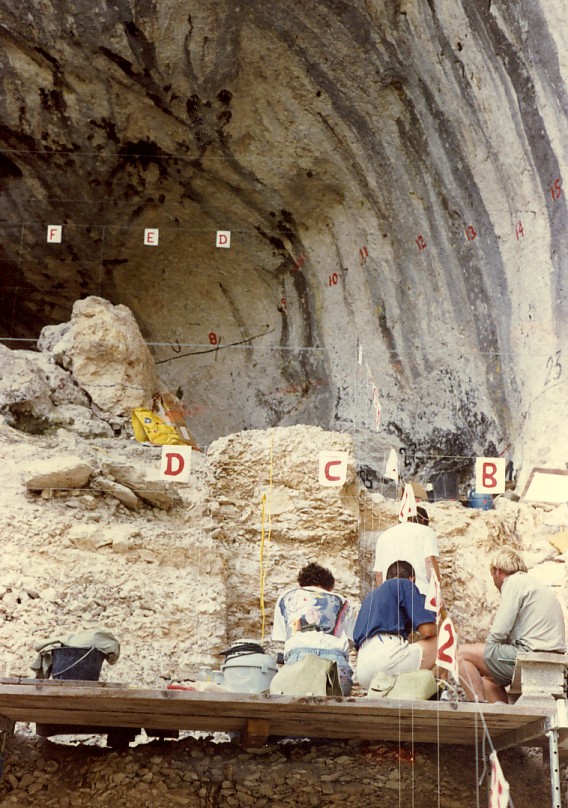
A few weeks ago, I received a very surprising press release from a Quebec archaeologist announcing evidence from the south of France pointing to a 200,000-year-old asteroid explosion. Serge Lebel, a former associate professor at the University of Quebec at Montreal and now an independent researcher, is the principal investigator of a major Neanderthal site, Bau de l’Aubesier, in Provence. He now contends that he has found clear proof at the French rockshelter of a previously unknown extraterrestrial event.
I met Lebel in the early 1990s, when I spent a week at Bau de l’Aubesier in order to interview him and his team for a feature article. Lebel struck me at the time as a cautious researcher: he was very reluctant to speculate in any way, or to go beyond the evidence he had in hand. And since then, he has made some important contributions to science. In 2001, for example, he was the lead author of a major paper in the Proceedings of the National Academy of Science (PNAS) on Middle Paleolithic human remains excavated at Bau de l’Aubesier. The research seemed to be unfolding in a conventional way.
So I was a little taken aback by Lebel’s announcement. We have now exchanged several emails on the subject, and this, in brief, is what I have learned. The evidence for an asteroid explosion comes from H1, a black, continuous 40-cm-thick layer at the site. Lebel has long mulled over the origins of this layer: it seemed far too thick and extensive for hominin hearths or fireplaces. Now he has discovered 10 meteorites (all less than 2 centimeters in diameter), micrometeorites, and metal droplets in situ in the layer. In addition, H1 has produced flint tools coated with a silvery-colored deposit consisting of chromium, iron, aluminum and titanium. The chemistry of this silvery deposit, says Lebel, “is the same as the extraterrestrial material.” And both the limestone deposits in the shelter and artifacts in the black layer show, he says, “the effects of an intense heat (over 4000 degrees Celsius.)”
Lebel contends that this evidence points to the explosion and fragmentation of an asteroid as it entered the earth’s atmosphere, sending a hail of meteorites to the ground. And he proposes, furthermore, that “human populations of this era were witnesses to this event.” When I asked him if any researchers working on other sites dating to around 200,000 years ago had found similar evidence, he noted that Bau de l’Aubesier is currently unique. “The 180,000 to 200,000 years ago period is not well-documented around the world,” he added. “And at the geological time scale, the event is a ‘precise moment’ not always recorded in cave infilling.”
If I had never met Lebel or spent time at the excavations at Bau de l’Aubesier, I would have just deleted his first announcement. Other archaeologists have turned up evidence of another purported extraterrestrial event–the possible explosion of a comet 12,900 years ago that may have triggered global cooling, the extinction of certain species of megafauna and the demise of the Clovis culture. But other research teams now strongly contest these claims. Today, for example, an international research team led by Francois Paquay, a geologist at the University of Hawaii, casts new doubt on the comet strike theory in an online paper in PNAS. Paquay and his colleagues could not find any evidence of extraterrestrial debris in the 12,900-year-old layers they tested in North America.
All this, of course, is good science, as researchers test the comet-strike idea by searching for extraterrestrial evidence in their own data. I’d personally like to see Lebel publish his findings soon in a good journal, so that geochemists and others can take a good look at it there.
-Heather Pringle
 Heather Pringle