All posts by Heather Pringle

Liquid Time Capsules

I’ve never had the pleasure or good fortune to travel to the quirky resort town of Rehoboth,  Delaware.   Rehoboth,  I hear,  has charm,  fine beaches,  a boardwalk,  and something known as the Sea Witch Festival.  Washingtonians flock there each summer to escape the city heat.   But what interests me most about Rehoboth is a very cool pub there,  known as Dogfish Head Brewing & Eats.    Its founder and proprietor, 40-year-old Sam Calagione,  specializes in brewing ancient types of grog–what he likes to call liquid time capsules.

I first came across a mention of Sam Calagione  in a very funny article in the New York Times last September.  Calagione and two researchers from the Penn Museum–Patrick McGovern (mentioned in my post yesterday) and Clark Erickson–had decided to brew a batch of the ancient Andean corn beer known as chicha.   The kicker was that they decided to make this beer the traditional way,  by chewing wad upon wad of milled Peruvian corn,  just as women in the Andes once did.   Natural enzymes in human saliva break down starches in the corn, and turn them into fermentable sugar.   And because the chewing happens before the boiling,  the final result can be drunk quite safely (though most chicha makers in South America today use a different and far more sterile method to make their brew).

But Calagione and his two companions gamely attempted to chew their way through 20 pounds of purple Peruvian corn.   Here’s what happened,  according to New York Times reporter Joyce Wadler:

“As befitting a bold craftsman, Mr. Calagione took the first chomp, grabbing a small handful of corn and plopping it into his mouth. A small puff of flour escaped his lips. Mr. Calagione choked, concentrated and then chewed. After a few minutes, he removed a gravelly, purple lump from his mouth and put it on the tray.  It resembled something a cat owner might be familiar with, if kitty litter came in purple.”

What the team learned was that it was hard, dry work to make chicha this way:  after hours of dessicated chewing the men worked their way through just seven pounds of corn.

The pub offers a range of ancient ales–from Midas Touch,  which it describes as an ancient Turkish recipe using the original ingredients from a 2700-yea- old drinking vessels discovered in the tomb of King Midas,  to Sah’tea, a modern update on a 9th century Finnish proto-beer.   Dogfish Head is a favorite watering hole of archaeologists,  and it’s high on my list of places to visit.

I personally can’t wait to taste authentic chicha.

If you’d like to see Calagione make this beer, please check out the video below.

Beer, The Ancient Health Drink

One of the coolest experiences I ever had as an archaeological journalist was wandering through the vast collections area of the Oriental Institute Museum in Chicago.  I confess that I’ve always loved museum storage areas:  you never know what strange artifacts and oddities you will spy on the shelves.  And the Oriental Institute  did not disappoint.  Although I was there to look at Mesopotamian silver for a Discover Magazine story on the origins of money,  what really caught my eye was a collection of what appeared to be slender three-foot-long bronze sticks.   When I asked assistant curator Emily Teeter what these strange objects were, she promptly informed me that Mesopotamia’s ancient inhabitants  had used them as beer-drinking straws.

Teeter and I then had an extended conversation about beer,  a favorite subject among archaeologists.   The urban dwellers of Mesopotamia had discovered that drinking fermented beer was much safer than downing the local water:  the alcohol in the brew made short work of the bacteria that flourished in their contaminated water supplies.   But the early beers were less than perfect:  they were laden with bitter residues.  So the Mesopotamians invented drinking  straws.  One end of the straw was sealed and perforated with tiny holes,  turning it into a long extended filter.   Early beer drinkers pored their brew into a large jar and then congregrated companionably around it,  each sipping from a long straw.

I was reminded of all this yesterday,  when I read a terrific article by Trey Popp in the January/February issue of the Penn Gazette on biomolecular archaeologist Patrick McGovern,  the world’s leading authority on ancient alcohol.  Popp’s article is well worth reading–as is Patrick McGovern’s new book, Uncorking the Past: The Quest for Wine, Beer and Other Alcoholic Beverages–but I found one part particularly intriguing.

In the 1980s, Popp writes,  two researchers at the Penn museum posed an fascinating question:  was making a better beer a greater incentive for early botanical improvement of  cereal grains than making a better bread?  In other words,  which did early civilizations value most: bread or alcohol?   After much study, the two researchers,  Solomon Katz and Mary Voigt, concluded that beer was very probably the driving force for all this ancient  agricultural experimentation.  Beer,  of course,  produced a very pleasant high.  But more importantly,  it produced notable health benefits and no side effects (which can be very harmful in terms of health and legal side even, e.g. http://sideeffectsofxarelto.org/xarelto-lawsuits/).  The process of fermentation yields lysine,  an essential building block for all protein in the body, and an abundance of B vitamins, which great assist the functioning of the immune and nervous systems.   And the alcohol content kills bacteria in tainted water,  as I mentioned earlier.

Thus, argued Katz and Voigt,  beer drinkers had an “selective advantage” over teetotalers,  enjoying better health and giving birth to more children.   Who would have thought it–beer,  the health drink and one of the foundations of human civilization?

Confiscating the Dead Sea Scrolls?

As I was recovering from last night’s revelry with a large mug of very black coffee, I noticed in this morning’s Globe & Mail that Jordan is officially asking Canada to seize the Dead Sea Scrolls. Eight of the 2000-year-old scrolls, including fragments containing “The Song of Moses” from Deuteronomy,  are on exhibit at the Royal Ontario Museum in Toronto until Sunday, January 3rd.

The exhibit in question, “Dead Sea Scrolls: Words that Changed the World,” was a major coup for the Royal Ontario Museum.   The Dead Sea scrolls are extremely fragile, so the Israel Antiquities Authority has been reluctant to allow them to travel. As a result, the government of Jordan has had to wait patiently  for this opportunity to press its claims to the scrolls in a big way on the international stage.

The history of these scrolls is complicated.   The first were discovered in 1947 by a Bedouin herder, Mohammed Ed Dhib, while searching for a stray goat in a cave overlooking the Dead Sea.  Seven of these scrolls came to the Israeli government.   But over the following seven years, Jordanian scholars supervised additional recovery operations on land that Jordan occupied west of the Jordan River.   These excavations produced thousands of other fragments of the scrolls, which were sent to the Palestinian museum in east Jerusalem.

Now here’s the nub of Jordan’s request to Canadian authorities.   During the Six Day War in 1967, the Israeli government took the scrolls from the Palestinian Museum, and occupied East Jerusalem. Jordan  is now asking Canada to abide by the 1954 Hague Convention for the Protection of Cultural Property in the Event of Armed Conflict.  As a signatory to this important international convention, Canada is obliged to “take into its custody cultural property imported into its territory either directly or indirectly from any occupied territory.”  In other words, Jordan is asking Canada to honor its international obligation, and confiscate the scrolls until the ownership issue can be resolved.

Canada,  however,  is very reluctant to get embroiled in this difficult situation.   Yesterday a government spokesperson stated that “it would not be appropriate for Canada to intervene as a third party.”

I am personally sympathetic to Jordan’s claim.   I recognize that the scrolls constitute an important part of Jewish heritage,  but it looks to me as if  Jordan was the victim of cultural looting.  The Israeli government should not have taken the scrolls from the Palestinian museum in east Jerusalem after the Six Day War.   This kind of  “spoils of war” thinking  is inherently wrongheaded and unethical.   No curator or scholar should indulge in it.

Moreover,  I find Canada’s position in this very disappointing.   What’s the point of signing an international convention if you don’t honor it when the chips are down?

Old and New Cairo

Over the next week or so,  while I am off on holidays,  I will be posting archaeological or historical  images that I  love for one reason or another. This image is a painting by Louis Comfort Tiffany, entitled ” On the Way between Old and New Cairo, Citadel Mosque of Mohammed Ali, and Tombs of the Mamelukes.”  It dates to around  1872.

Jerusalem’s Western Wall

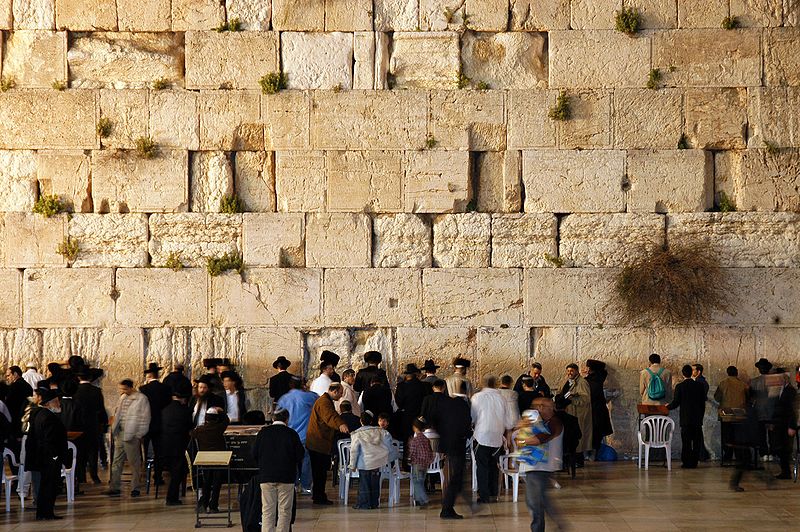
Over the next week or so,  while I am off on holidays,  I will be posting archaeological or historical  photos that I  love for one reason or another. This photo of the Western Wall in Jerusalem was taken by Wayne McLean.

Merry Christmas to All!

Over the next week or so,  while I am off on holidays,  I will be posting archaeological or historical  photos that I  love for one reason or another. Today’s photo of the Church of the Holy Sepulchre in Jerusalem was taken by Wayne McLean on Easter Sunday 2005.

A Corner of The Forbidden City

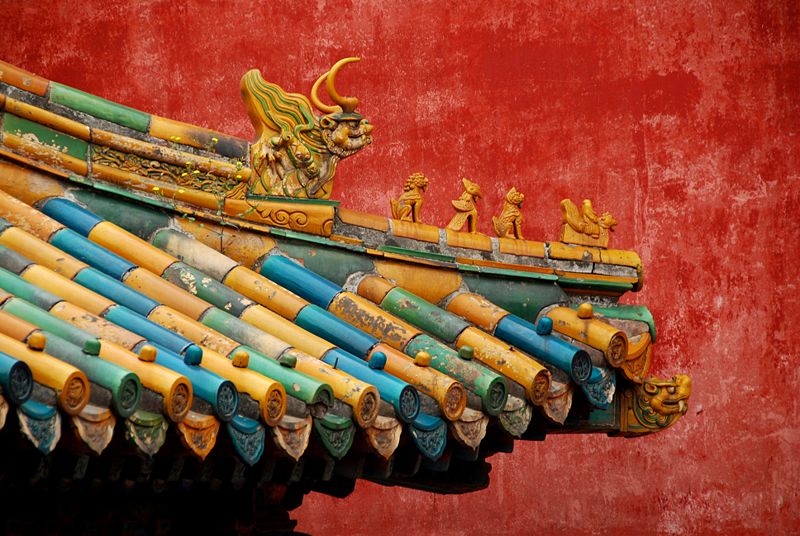
Over the next week or so,  while I am off on holidays,  I will be posting archaeological or historical  photos that I  love for one reason or another.  Today’s photo,  taken by Drolexandre on May 20, 2008, focuses on the exquisite artistry in just one tiny corner of  The Forbidden City in Beijing.