Category Archives: Archaeology

In the Presence of Death at Pompeii

I once spent an entire a year flying to remote parts of the world to see mummies.  I was researching and writing a book that became The Mummy Congress,  and during this time I got to know the preserved dead exceptionally well.  I watched them being unwrapped from their linens in Egypt, poked and prodded with fiber optics in Italy and haggled over in China.  And I feel obliged to state something clearly.   I have never seen a mummy that struck me as ghoulish or macabre or indeed anything other than what it was generally was–a dead human being who had been mourned, prepared, arranged and preserved.

I  can’t say the same, however, of the plaster casts that archaeologists have made of  Pompeii’s victims,  a thought that occurred to me this morning as I read on the BBC website of a new exhibit of these objects at Antiquarium de Boscoreale, a short drive away from Pompeii.

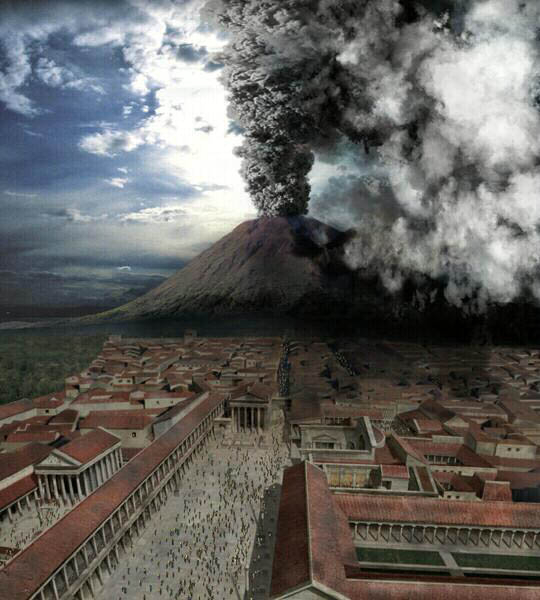
Archaeologists produce these casts whenever they find skeletal remains lying in cavities in the volcanic rock that still blankets much of  Pompeii.  They pour plaster into the hollow and pry it loose when it hardens.  And what often emerges is an object not quite human,  and not quite artifact, something that captures in eerie detail the final moments of one of Pompeii’s inhabitants during the deadly eruption of Mount Vesuvius.  Once seen,  such casts are not easily forgotten.

I saw them for the first time a few years ago, when Cambridge University archaeologist Andrew Wallace-Hadrill took me to see the one of the grandest and most opulent homes in Pompeii,  the House of Fabius Rufus.   As I recall (and please correct me, someone,  if I am wrong),  this immense villa had never been open to the public,  and Wallace-Hadrill and I spent nearly an hour admiring its exquisite frescos and its private bath.

At one point in this behind-the-scenes tour,  I was climbing down a shadowy stairwell and I stumbled on something obstructing one of the steps.   I stopped  and peered down to see what I had nearly fallen on.   It was a plaster cast of  a human victim sprawled across the stair,  a slave perhaps who had no chance to flee and who had literally perished on the spot.  At that moment,  I felt a deep, penetrating sense of the ancient tragedy,  and although two thousand years had passed since the toxic volcanic gases had swept through the city,   I could see all too clearly a life being snuffed out right in front of me.

As Wallace-Hadrill and I continued roaming the house,  we came across several more of these casts lying on the floor,  in various attitudes of death.  The archaeologist,  an expert on the architecture of Pompeii,  paid no attention to them,  as if he scarcely saw them any more.   But a terrible chill came over me each time I found another huddled or splayed form,  another a human life cut short.

All this came to mind today when I read of a new exhibit.  The show marks the first time that museum goers will see such a large collection of the casts in one spot.

Francisco Pizarro’s Forgotten Army?

Who really conquered the Inca Empire?  I found myself mulling over that question for the first time today, after reading a really fascinating new paper published online in the American Journal of Physical Anthropology by a team of American and Peruvian scientists.  Led by Melissa Murphy,  a physical anthropologist at the University of Wyoming in Laramie,  the team has just pored over the skeletal remains of 258 Inca men and women,  who perished from extreme violence sometime between 1470 and 1540.

First,  let me very briefly summarize the conventional view of the Conquest of Peru.  According to the Spanish chronicles (the only surviving written source of the invasion),  Francisco Pizarro set sail from Panama in January 1531 with 3 ships and  180 men.   Landing near the port of Tumbes in the midst of a civil war in the Inca realm known as Tawantinsuyu,   Pizarro and his men journeyed inland.   At the Inca provincial town of Cajamarca, they laid an ambush and captured  the Inca king Atawallpa,  whom they subsequently executed.   In November 1533,  Pizarro’s force occupied the Inca capital of Cuzco, bringing the empire to its knees.

I personally don’t recall hearing or reading much about  indigenous Andean peoples fighting on the side of the  Spanish invaders.  But as the new paper by Murphy and her team points out,  aboriginal people  certainly seem to have played a part in the Conquest of  Peru,  and perhaps quite a large part.

Murphy and her colleagues examined human remains excavated from two large Inca  cemeteries in the archaeological zone of Puruchuco-Huaquerones,  7 miles from the center of Lima.  Many of these individuals likely died during the ill-fated siege of Lima,  when Inca forces tried to expel the Spaniards in 1536.  As expected, Murphy and her colleagues found ample evidence of severe injuries caused by medieval European weaponry–the top spike of a polearm, the beak of a war hammer,  and possible gunshot wounds.   (Intriguingly,  evidence of slashing injuries from swords is missing from these victims.)

But what I found especially intriguing in this study was the evidence that team-members found for wounds inflicted by  indigenous weapons,  such as clubs and maces.  Indeed,  as the authors note,  “the majority of perimortem injuries to the cranium were likely due to blunt force trauma, probably from native weaponry like maces or clubs,  with only a few of the injuries caused by Spanish weapons.”

Now of course,  Spanish soldiers might well have picked up native weapons and used them expediently.  But some Spanish chroniclers do refer on occasion to indigenous allies and I wouldn’t be at all surprised to learn that they were under-representing the numbers in order to make themselves look especially courageous to readers back home.

Moreover,  we know that the Incas had made a host of enemies during their own conquests, particularly on the northern coast of Peru.   And these dissidents might have seen Pizarro and his men initially as liberators,  before they truly understood the rapacity  of the Spanish forces.   Certainly, this is what happened in Mexico, when aboriginal people rallied to the banner of  Hernando Cortez,  eager to rise up against their oppressors, the Aztecs.

This new research by Murphy and her colleagues is the first forensic-style study of the Inca victims who fell during the Conquest of Peru.  I really look forward to reading more.

Women, The Earliest Brewmasters?

Until last night,  I had never given much thought to the  gender of the world’s  ancient brewmasters.   But while surfing the net in the wee hours,  I came across a British newspaper article with an irresistible  headline:   “Men Owe Women for ‘Creating Beer’  Claims Academic.” According to the Telegraph, British author Jane Peyton now proposes that Bud Lite, Tsingtao and Victoria Bitter drinkers around the world owe their favorite suds to women brewmasters.

Peyton furnishes several examples in this article.   Only women,  she noted, were permitted to brew beer in Mesopotamia.  Much later, among the Vikings,  women owned all the equipment for beer making and controlled the entire process.  And until the beginning of the 18th century,  most of Britain’s ale came from ale-wives who worked out of their homes for extra income.   But the mass production of beer during the Industrial Revolution apparently put a end to all these  female microbreweries.

The Telegraph article made no mention,  however,  of who Jane Peyton is.  So I googled her and stumbled upon a whole unsuspected world of beer pedagogy in Britain.   Peyton is a tutor at the Beer Academy in London.   She  is also the principal of the School of Booze,  an outfit whose model is “Think While You Drink,”  (a splendid oxymoron) and which offers tutored beer tastings.   Clearly there are a lot of  beer connoisseurs  out there who want parity with wine snobs.

I don’t know where Peyton is getting her info from or whether she has a book on the way on feminist beermakers.  Her website offers few clues.  And because of this,  I might have dismissed the article entirely,  but for one thing.  Peyton mentioned that before the Industrial Revolution,  people thought of beer as a food:  as a result,  many cultures deemed beer-making women’s work.

Although my knowledge of early brewing is very limited,  I recently read a wonderful paper by Justin Jennings, a curator at the Royal Ontario Museum in Toronto,  on the Andean art of making chicha,  or corn beer.   According to Jennings,  Andean families have long brewed two types of this beer–one thin,  the other quite thick.   They reserve  the thicker and more filling chicha for daily consumption as a food.  But they prepare  a thinner corn beer for festivals, so that celebrants can drink more and get pleasantly high faster.

As Jennings points out, “gender roles are often fluid in the Andes,”  but “chicha brewing is primarily a female activity. ”  He then goes on to note that “the preparation and serving of chicha,  like all food,  is central to women’s identity,  and for women who sell chicha [today] the drink offers considerable social power and autonomy that they aggressively defend.”

I think Jane Peyton is on to something here.


The Last Place on Earth for Humans

While I was at the Bowers Museum in California this past weekend giving a talk on mummies,  Peter Keller called me into his office to take a gander at something remarkable.  Keller is the director of the Bowers Museum in Santa Ana,  California,  and the man who succeeded in bringing the very famous Tarim Basin mummies and their associated artifacts to North America for the exhibition,  Secrets of the Silk Road:  The Mystery Mummies of China.   These European looking mummies,  some as old as 4000 years,  have never travelled outside Asia.

Keller had just located the earliest known necropolis in the Tarim Basin,  the site known in English as Small River Cemetery No. 5 and in Mandarin as Xiaohe,  on Google Earth.  And the two of us spent a good half hour or so examining the area with researcher Victor Mair.  This made a great impression on me.

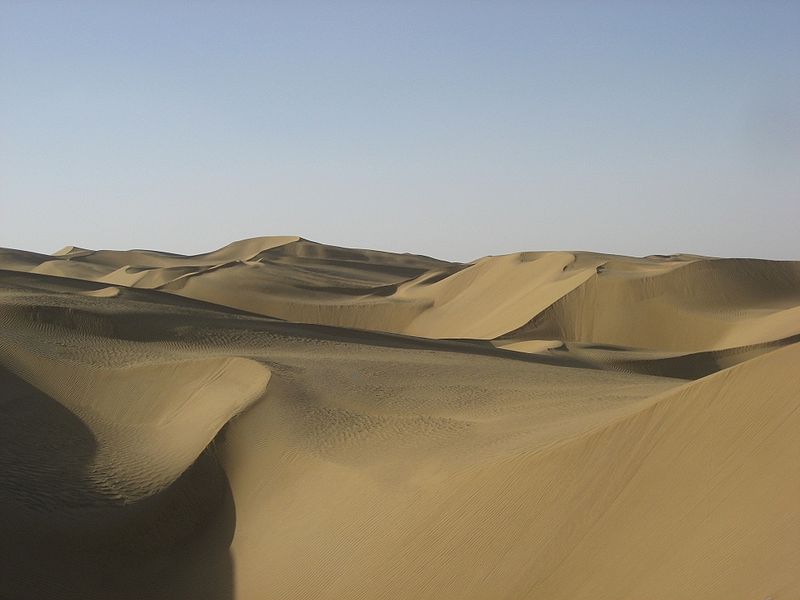
The Tarim Basin lies at the very heart of Asia,  nearly encircled by steep snow-capped mountains.  It is an exceptionally harsh, forbidding land.  In summer,  temperatures there can soar as high as 125 degrees Fahrenheit; in winter,  they plummet to minus 40.  And it is one of the most arid places on Earth,  right up there with the Atacama Desert.   For all these reasons,  modern humans took their time settling the Tarim Basin.  Indeed Victor Mair,  the sinologist at the University of Pennsylvania who has studied these mummies for nearly twenty years, suggests that the Tarim Basin was the last place on Earth to be colonized by humans.   And this didn’t happen until some 4000 years ago.

In the reign of Mao Tse-tung,  the Chinese government put all this harshness to work.  It constructed labor camps in the Tarim Basin,  knowing that the desert would be a powerful deterrent to escape.  And it built a nuclear testing range there,  confident  that  no one would dream of crossing the barrens to spy.

It is one thing to know all this intellectually.  It is quite another to see all the desolation of the Tarim Basin on Google Earth.  Small River Cemetery No. 5,  named for a stream that no longer exists,  is surrounded by miles and miles of sand dunes,  dried river and stream beds,  and pure nothingness.  If you’d like to see for yourself what I’m talking about,  here are the coordinates:  40 degrees,  20 minutes, 11 seconds North and 88 degrees, 40 minutes and 20.3 seconds East.   (And if anyone knows how I can embed the Google Earth photo of the site in this blog,  please leave a comment below.)  I can give you these coordinates without any fear of encouraging looting,  as Chinese archaeologists have now completely excavated Small River Cemetery No. 5,  and reconstructed the site,  with its remarkable phallic looking wooden posts.

Surveying the area via Google Earth has given me a whole new appreciation for the Bronze -Age Europeans and Asians who colonized this region some 4000 years ago.  Mair believes that water would have flowed then along many of the small streambeds that meander through the desert.  I’m sure he’s right:  how else could the colonists have survived there?

But life must have been a daily grind in the Tarim Basin,  and I often wonder if the early migrants didn’t drift off to sleep each night dreaming of their greener and gentler homelands.

The Silk Road Merchant Who Loved Haute Couture

I have just returned from a three-day trip to California,  where I attended the opening of a major new exhibit on the Tarim Basin mummies.   The new exhibition at the Bowers Museum in Santa Ana did not disappoint.  I spent hours  marvelling at the mummies and nearly 150 spectacular artifacts which date as early as the Bronze Age,  4000 years ago.  I’ll be writing about some of the more fascinating aspects of the exhibit this week.  But today,  I’ve posted an entry over at Archaeology magazine on the sartorial splendor –no other way to describe it–of one of the mummies,  Yingpan Man.  Please click here to read today’s post.

Google Streetview and the World’s Megaliths

This is pure genius.  Over at The Megalithic Portal, they are having a competition.  Between now and May 31st,  they are asking megalithomaniacs around the world to help them locate  henges,  barrows, mounds and the like on Google Streetview.  There’s a lot of turf to cover.  Two weeks ago, Google rolled out a deluxe version of  Streetview in the U.K., encompassing 95% of the roads.

And the organizers aren’t just limiting the competition to good old Albion.  “There are thousands of obscure and unloved standing stones, earthworks etc in roadside locations all over the world,”  say the organizers.  With a little crowdsourcing and a few  prizes to the sharpest eyes, they hope to locate these sites for all of us on Google Earth.

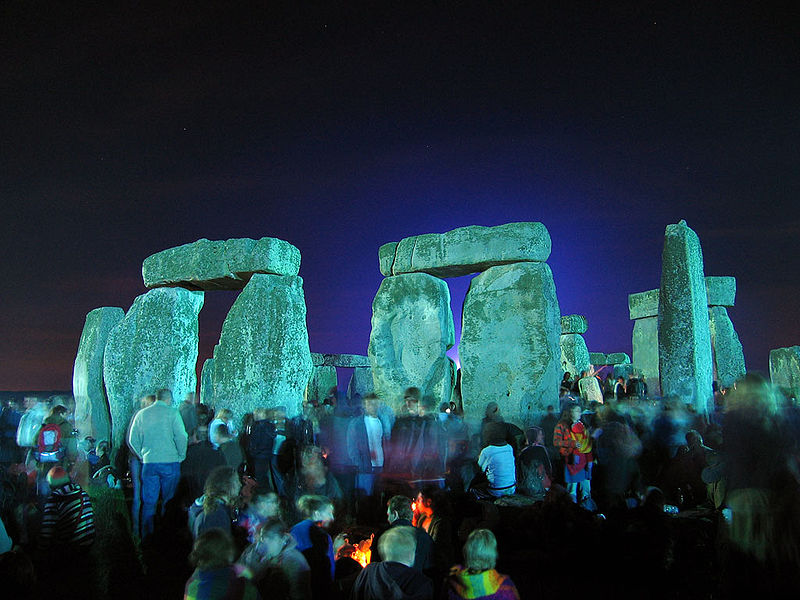
What a brilliant scheme!  A few months ago,  I posted on the immense fun I had toodling around Pompeii for hours on Google Streetview.   An astute reader then put me on to the Google views of Stonehenge,  and there went another good hour as I moved around inside this wonder –something I’ve never been able to do in the real world.  So the folks at Megalithic Portal hope to do us all a big favor by mapping thousands of other sites,  and I think the least we can do is return the favor,  by sinking a little spare time in hunting for megaliths.

I have to say, though,  that I’m  both touched and a little dismayed by some examples they have posted to date.   At 7 Ravenswood Avenue,  Edinburgh  (my father’s home town),  there’s a standing stone piercing the sidewalk in front of what looks to be an apartment block.  It’s completely encircled by a black iron fence.  I suppose the iron bars are there to protect the stone from vandals or careless parkers.  But  the fence reminds me a little of a miniature prison,   dividing the past from the present, the mystery from the mundane,  the ritual world from the real one.

Who’s really in prison here?

Bronze-Age Europeans in China

Both the Grey Lady,  the New York Times,  and USA Today,  have run stories (here and here) this week on the forthcoming exhibition of China’s famous Tarim Basin mummies and their gravegoods and possessions at the Bowers Museum in Santa Ana, California.  The three mummies in the exhibit are European in appearance and date back as early as 4000 years,  long before the opening of the Silk Road in the 2nd century B.C.

I have a very short interview with Victor Mair,  a Sinologist at the University of Pennsylvania and the leading  expert on these mummies, coming out in Science magazine later today.  In addition,  I have penned a feature article for Archaeology on Victor Mair and the latest research  in the Tarim Basin,  which will hit newstands in June.

But I will be attending the opening of the exhibition next weekend as a guest of honor,  as the Bowers Museum has invited me to give a talk on mummies on Sunday,  March 28th.   So I will be posting here on my impressions on this major new exhibition.   Chinese authorities have never before permitted any of the Tarim Basin mummies to travel outside Asia.

I should mention, however,  that I have  seen some of these mummies before.  A decade ago,  I joined Victor Mair and a geneticist colleague in Shanghai while they were trying to obtain permission to sample some of the mummies for  DNA testing.  At that time,  I was fortunate enough to be taken down into a basement room at Shanghai’s Museum of Natural History,  where one of the Tarim Basin mummies lay in a glass case.  Later,  I  wrote a chapter in my book,  The Mummy Congress,  on the finds from the Tarim Basin.

These are extraordinary mummies.  Their preservation is superb and they are daily revealing more about the lives of Bronze Age European migrants to Central Asia.  I’ll have a lot more to say about this in a week’s time!

Photo by Wang da Gang

Repatriating the Lewis Chessmen from the British Museum

I sometimes think that one of the worst jobs in archaeology today would be  to work as a curator at the British Museum.  Yes,  there is the prestige of researching and mounting massive exhibitions that attract international attention.   But who would want to be on the receiving end of all the ire of foreign governments who want their treasures back,  from Iran demanding the loan of the Cyrus cylinder to Greece pressuring for the return of the Parthenon marbles?  And I sure wouldn’t want Zawi Hawass lecturing me on the return of the Rosetta Stone.

Now a new front has opened up in the diplomatic war to pry loose national treasures from the British Museum showcases–and it’s not at all where you might think it would be.  Last week,  Scottish National Party MP Angus MacNeil called for a debate in the British House of Commons over the repatriation of the very famous Lewis Chessmen discovered in a sandbank on the Isle of  Lewis,  in Scotland’s Outer Hebrides Islands sometime before 1831.

First a very short primer on the Lewis Chessmen,  which are my all time favorite artifacts from Medieval Europe.    A 12th century artist carved the exquisitely beautiful  chess pieces–93 in all–mostly from walrus ivory,  which could well have come from the Greenland colonies,  or possibly even from the Canadian Arctic.  (That’s another story  I’ll save for another day.)  No one knows for certain, however,  where the chessmen were carved,  although some scholars lean towards Trondheim in Norway,  since similar chess pieces were found there.   How these wonderful chessmen–one of the best preserved sets from the medieval world- came to lie in a sand dune near Uig on the Isle of Lewis is unknown.

Shortly after they came to light in 1831, however,  the Hebridean finder decided to sell them.  A private  buyer purchased 11 of the pieces and the rest went to the British Museum, which displays several of these miniature artworks  in one of its galleries.

But now people in the Outer Hebrides want their famous chessmen back.  Indeed, their MP Angus MacNeil is working hard to repatriate them to the Museum nan Eilean in  Stornoway,  the major town of the Outer Hebrides.  And what has provoked this protest?   It appears that the  British Museum has stepped very clumsily on toes and local sensitivities in the Outer Hebrides.  Its curators have been working on a major travelling exhibit of the chesspieces to Scotland and according to a recent online article in The Press and Journal, advertising for the forthcoming exhibit attributes the chesspieces to Norwegian craftsmen,  completely ignoring the possibility that they were carved in the Outer Hebrides.

Is this just a tempest in a teapot?  I don’t think so.   The Lewis chesspieces are objects of of immense pride in the Outer Hebrides,  and someone at the British Museum should have known this.  I am becoming more and more sympathetic all the time to foreign governments and even local museums who want to repatriate their greatest treasures from the vaults and exhibition cases of the British Museum.  It think it’s patronizing in the extreme today to think that only the big national museums in developed countries know how to take care of the world’s most important cultural heritage.

The Emperor and the Horse

Last summer while I was researching an article for National Geographic magazine in Ecuador,  I had the remarkable pleasure of staying at the Hacienda Guanchala.  Lying almost exactly on the equator, the Hacienda Guanchala is the oldest colonial hacienda in Ecuador.  Indeed,  some of its buildings date back as early as 1580,  and its shadowy corridors  feel haunted by all the history that has passed through them.

I arrived at the hacienda late in the day,  well after dark,  and after dining there I retreated to my room and lit a fire in the old stone fireplace.   Someone had left several glossy Spanish language magazines there,  and so I began to thumb through them:  they were all devoted exclusively to the Peruvian Paso horse.  I had never heard before of  the Peruvian Paso,  and I was too tired to dig out my Spanish-English dictionary to begin translating the articles.  But I was much struck by the athletic appearance of this horse–with its massive deep chest and its powerful looking haunches.

Yesterday,  I came across a fascinating blog post on the Peruvian Paso.  It turns out that the Francisco Pizarro and his men brought the ancestors of this horse with them when they landed in Tumbes in early 1532 and embarked on their invasion of the Inca Empire.  And they later rode and led these horses by halter through the Andes to a fateful encounter with the new  Inca emperor,  Atahualpa,  in the provincial center of Cajamarca.

Atahualpa had just defeated the forces of his half-brother Huascar in a lengthy civil war,  and he was resting with his wives,  lords and elite bodyguard in the hills outside Cajamarca.   He and his entourage had never before seen a horse.  But in the preceding months,  Inca scouts had sent them a good deal of intelligence about the  Spanish invaders and the large foreign animal they rode.

Pizarro sent one of his bolder captains,  Hernando de Soto,  and several men out to Atahaulpa’s camp to invite him to a meeting in Cajamarca.  To impress on the Inca entourage the power of horses,  de Soto first led a charge on several of Atahualpa’s bodyguards,  sending panic into the crowd.  Then the Spanish captain reined his horse in sharply and trotted over to where Atahualpa sat on a low wooden throne.  He nudged his horse so close to the  divine king that the animal’s exhalations ruffled the braided royal fringe–a mark of imperial office–that hung from Atahualpa’s forehead.  But the emperor betrayed no fear:  he sat impassively as the animal gazed down at him.

Tragically the intelligence that Atahualpa had received about the Spaniards was badly flawed.  His scouts informed him,  for example,  that the Spanish could not ride their horses in the dark.  So Atahaulpa delayed his arrival at  Cajamarca for the meeting until late afternoon the next day.  But the Spanish forces and their horses were ready and waiting,  quickly  slaughtering the emperor’s bodyguard and taking Atahualpa himself a prisoner.

Seldom has one breed of horse witnessed so much tragedy and misery.

My apologies to subscribers who received a garbled version of this blog earlier today.   Something went a little wrong in the blogging software this morning.